 Do you have a problem with bats at your house (e.g. bats in the attic) or building and want to get rid of bats? As part of our animal control services, we provide bat removal service in Houston, Dallas, Fort Worth and Austin.
Our wildlife animal control services include getting rid of bats in your attic, and animal-proofing your home.
Call 281-961-0131 to get rid of Bats
Many people are scared of bats because they think they are creepy. This is likely because of how these little creatures are usually used in movies.
The reality is that they can be dangerous to you because of the diseases they carry. This makes bats removal essential if you have bats in the attic.
More About Bats & Why You Need To Get Rid Of Bats
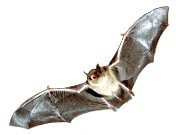
A bat is a mammal in the order Chiroptera. The word is from the Greek word for “hand wing.” If you look at the wing, you can easily see where the name comes from. They are the only flying mammals in the world.
There are about 1,100 species of bats. Only 32 species live in Texas. About 70 percent of bats eat only insects. Of the remainder, most feed on fruits. Only three species sustain themselves with blood. The good side of bats is that they help to keep insect populations under control, as well as pollinating flowers and spreading seeds.
However, as a result of their ability to fly and easily cover large distances, as well as their broad distribution, social behavior, and close evolutionary relationship to humans, bats are very good carriers and disseminators of disease.
Some of the diseases they carry include rabies, severe acute respiratory syndrome (SARS), and Henipavirus (ie. Nipah virus and Hendra virus). They may even carry the deadly ebola virus, but this is not a problem in Texas.
Only 0.5% of bats carry rabies. However, of the very few cases of rabies reported in the United States every year, most are caused by bat bites.
Although most bats do not have rabies, those that do may be clumsy, disoriented, and unable to fly, which makes it more likely that they will come into contact with humans.
Unfortunately, people’s houses can also make great homes for bats. They can enter through openings as small as a quarter inch by a half inch.
Call Us for Bat Removal Service
Like any wild animal, avoid contact with bats. Call Wilderness Animal Control instead. We know how to do humane bat removal from your attic with the minimum risk. Our number is 281-961-0131.
PS. Our bats removal service is guaranteed for 4 years. That is much better than the typical industry warranty of 6-12 months. We will make sure that the bats in your attic are removed and that they don’t come back!
Call Us at 281-961-0131