
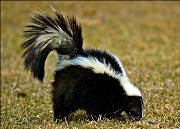
 Do you need to get rid of skunks and need a reliable skunk removal service? We provide skunk removal in Houston, Austin, Dallas & Fort Worth.
Skunks are cute little animals, but don’t be fooled… they can create a stench that is up there with some of the stinkiest things that you will ever smell.
Call 281-961-0131 to get rid of Skunks
This ability to create a stench is part of their defense mechanism against threats. If your pet becomes a threat to a skunk, they will probably be sleeping outside for a few days!
Skunks are classified in the family Mephitidae. This comes from Latin word for stench… go figure!
Nine species ranging in size from one to ten pounds can be found throughout the Americas from South America to Canada.
A Skunk has two glands that produce a mixture of sulfur-containing chemicals. The odor of the fluid is strong enough to ward off bears, and can be difficult to remove from clothing. Muscles located next to the scent glands allow them to spray with high accuracy and distance. (Up to 10 ft.!)
The spray can cause irritation and even temporary blindness. Even a human nose can detect the odor a mile away downwind!
Skunks and man come into conflict for the usual reasons: Nesting sites and food. Skunks are den critters, so they love old junk and wood piles, and will move in under your house if they can get in.
They’re not picky eaters, so trash cans are a favorite food source. Sealing your home is key to preventing these unwanted housemates.
Up to one third of skunks carry rabies, but so far no recorded cases of human rabies have been linked to skunks.
Call Us for Skunk Removal
If you have a problem with skunks and want them removed without getting hit with that foul-smelling liquid, call us. We do skunk removal all the time. Our number is 281-961-0131.